
Isle of Man Edges Ahead in the Data Economy: is this a wake-up call for Jersey’s “Time to Win”?
31/03/2026
While Jersey focuses on streamlining its financial services and leading in tokenisation, the Isle of Man has just passed world-first legislation that treats data as a formal legal asset. Is this the dent in Jersey’s plans, or the spark it needs to accelerate?
- In the competitive world of Crown Dependencies, being first matters.
- This week, the Isle of Man took a bold and defining step by successfully passing the Foundations (Amendment) Bill 2025 through Tynwald. The new law creates a statutory framework for Data Asset Foundations (DAFs), the world’s first legal structure that officially recognises data as a capital asset.
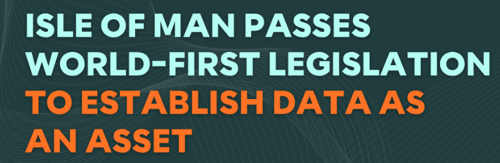
- Built on the island’s established Foundations Act 2011, this legislation allows businesses to place datasets (customer records, AI training data, sensor information, health records, and more) into a dedicated legal entity with clear ownership, governance, and monetisation rules.
What is the fuss all about
The Data Asset Foundation (DAF) turns “data” from something vague and risky into a proper legal asset you can own, control, and monetise, all within a special Isle of Man legal box (a foundation with full legal personality). It’s like giving your data its own passport and bank account.
- Companies (especially in tech, fintech, AI, health, manufacturing, logistics, insurance, or any data-heavy business) now have a trusted, super-secure legal home for their most valuable asset, one that no other country offers yet.
- It reduces risk, opens new revenue streams, makes funding easier, and lets them collaborate safely.
- Think of it as the missing piece that turns “data hoarding” into “data working for you.” Businesses get clarity, control, and cash-flow potential they’ve never had before. The Isle of Man just handed them the world’s first proper toolbox for it.
- This is the part that really matters for companies, startups, banks, hospitals, AI firms, manufacturers, and anyone sitting on valuable data they’re not fully using yet.
[see part 2 of this blog for further details]
Why This Move Is Significant
Data is often called the most valuable yet most underutilised asset of the 21st century. Until now, companies have struggled with murky ownership rights, risky sharing arrangements, and difficulty valuing data on balance sheets or using it to raise investment.
The Isle of Man’s Data Asset Foundations solve these problems head-on:
- Clear legal ownership Data gains a proper “title deed” inside the foundation.
- Safe collaboration: Companies can securely share or pool data with partners without losing control.
- Monetisation made easy. Data can be licensed, valued, used as collateral, or included in M&A deals.
- Strong governance. Built-in fiduciary oversight, transparency, and compliance keep everything trustworthy and compliant with regulators.
This isn’t just theoretical. Digital Isle of Man developed the initiative as part of the island’s long-term economic strategy, aiming to leverage its strengths in regulation, security, and professional services to attract high-value data businesses, tech firms, AI companies, fintechs, and health-tech players.
How Does This Compare to Jersey?
Jersey has been no slouch in the digital space. It has pioneered practical experiments with data trusts (such as the LifeCycle cycling data trust and the Roberta health data project), and its Digital Jersey team has actively promoted data stewardship services. Jersey’s trust and fiduciary expertise give it natural strengths here.
However, Jersey’s recent “Time to Win” report (published March 2026) focuses heavily on protecting and growing its core financial and related professional services (FRPS) sector through:
- Streamlining regulation and tax administration
- Embracing digitalisation and leading in the tokenisation of assets
- Renewing appetite for growth and improving competitiveness against global IFCs
Notably, while Jersey talks about making the most of its “data assets” in its Digital Economy Strategy and supports data trusts under existing flexible trust law,
- it has not yet introduced a dedicated statutory framework that treats data itself as a ring-fenced capital asset in the same clear, world-first way as the Isle of Man.
The IOM’s move feels like a proactive strike,
- The IOM is creating a new niche before others catch up.
- For companies wrestling with data governance in an AI-driven world, having a purpose-built legal home on the Isle of Man could become a compelling reason to locate structures (or even operations) there.
A Dent in Jersey’s Plans… or a Healthy Spur?
Is this bad news for Jersey? Not necessarily, but it is a clear signal.
Jersey’s “Time to Win” rightly calls for innovation, faster processes, and bolder digital plays. The report already highlights the need to modernise frameworks for digital assets and tokenisation.
Extending that thinking to data asset governance could be a natural next step. Jersey’s existing strengths in trusts, combined with its data trust pilots, mean it could potentially build on (or even leapfrog) what the IOM has done if it moves quickly.
Competition between the islands has always been friendly yet fierce both benefit from being stable, well-regulated jurisdictions with strong professional services ecosystems. The real winners will be the businesses that gain better tools to unlock value from their data.
For now, though, the Isle of Man has grabbed the headline as the pioneer of statutory Data Asset Foundations. It has created concrete new commercial opportunities: data valuation services, data licensing, fiduciary data trusteeships, and secure data-sharing structures, all backed by Manx law.
What This Means for Businesses
If your organisation holds valuable datasets but struggles to:
- Prove ownership
- Share data safely with partners
- Value it for investors or loans
- Monetise it without losing control
…then the Isle of Man just opened a practical new door that didn’t exist anywhere else.
Expect to see pilot Data Asset Foundations launching soon on the IOM, along with a wave of new professional services to support them.
Final Thought
The data economy is still in its early days. The jurisdiction that first provides clear, trusted, and practical legal infrastructure for treating data as a real asset will attract significant investment, jobs, and innovation.
The Isle of Man has made its move, and it has done so decisively. Jersey’s “Time to Win” plan shows ambition and self-awareness. The question now is whether Jersey (and others) will respond with equal speed and creativity in the data space.
Because in the race to own the future of data, being first or close behind with a better offering could make all the difference.
Part 2 – SHOW ME THE MONEY!!
The Data Asset Foundation (DAF) turns “data” from something vague and risky into a proper legal thing you can own, control, and make money from
The Data Asset Foundation (DAF) turns “data” from something vague and risky into a proper legal asset you can own, control, and monetise, all within a special Isle of Man legal box (a foundation with full legal personality). It’s like giving your data its own passport and bank account.
- Companies (especially in tech, fintech, AI, health, manufacturing, logistics, insurance, or any data-heavy business) now have a trusted, super-secure legal home for their most valuable asset, one that no other country offers yet.
- It reduces risk, opens new revenue streams, makes funding easier, and lets them collaborate safely.
- Think of it as the missing piece that turns “data hoarding” into “data working for you.” Businesses get clarity, control, and cash-flow potential they’ve never had before. The Isle of Man just handed them the world’s first proper toolbox for it.
- This is the part that really matters for companies, startups, banks, hospitals, AI firms, manufacturers, and anyone sitting on valuable data they’re not fully using yet.
Here’s each benefit, explained in plain English with real-world-style examples (based on how the Isle of Man government and experts describe it working):
- You can now legally “own” your data properly
Before this law, data was tricky; you might “have” it on servers, but proving ownership in court, contracts, or to investors was messy (no clear rules anywhere in the world). Now, you can “dedicate” your datasets to a Data Asset Foundation. The foundation becomes the legal owner, and you get a clear, official record (via a public Data Asset Register) showing exactly what the data is, where it came from, who controls it, and its quality/consent history. It’s like registering land or a patent.
Examples:
- A fintech app collects millions of customer transaction records → puts them in a DAF → now it has a legal “title deed” proving it owns that data.
- An AI company has huge training datasets → dedicate them to a DAF → it can prove ownership for partnerships or sales.
- A hospital group’s anonymised patient records → legally owned and ring-fenced in the foundation.
- Safe sharing without losing control
This is huge. Normally, if you share data with a partner, you risk them copying it, claiming it, or it leaking, and good luck getting it back. With a DAF, the foundation holds the data. You set strict rules in the foundation’s legal charter (who can access it, for what purpose, how long, under what conditions). Partners can use it (including analysis), but the foundation still owns it. Built-in governance, audits, and tech controls keep everything compliant and secure.
Examples:
- Two rival car manufacturers want to combine sensor data to build better safety AI → they both contribute anonymised data to one neutral DAF → they get joint insights but neither loses ownership or control.
- A health-tech firm shares anonymised patient data with researchers for new drug trials → privacy is protected by law, consent is tracked forever, and the original company keeps full legal rights.
- An airline pools maintenance data with competitors for predictive engine failure models → everyone benefits from safer flights, but each keeps their own data ownership.
- Easier to raise money / sell/license it
Data finally shows up on your company’s balance sheet like a real asset (property, patents, or cash). Banks and investors can properly value it, use it as collateral for loans, or include it in deals. You can license it (rent it out) while still owning it forever.
Examples:
- A logistics company (like a FedEx-style firm) has route-optimisation data worth millions → puts it in a DAF → lists it on the balance sheet → uses it as collateral to borrow money for new trucks or AI upgrades (similar to how airlines securitised loyalty programmes in the past).
- A retail chain’s customer shopping data → licenses parts of it to suppliers for targeted marketing → gets ongoing royalty payments while keeping ownership.
- A startup raising investment → shows investors “we have £X million in legally owned data assets in our Isle of Man DAF” → much easier pitch than “we have some spreadsheets.”
- New professional services will appear (help you actually do all this)
The island is already gearing up with experts. You won’t have to figure everything out yourself. New specialists will handle the hard parts.
Examples of services:
- Data valuation experts → accountants and analysts who put an official £/$ value on your datasets (for balance sheets or sales).
- Data trustees/fiduciaries → independent professionals who manage the foundation day-to-day (like a trustee for a trust fund).
- Data licensing lawyers & tech firms → they set up the legal charters, access controls, and even the tech platform to share data safely.
- Auditors → regular checks to prove everything is compliant and ethical.
Jobs
- A small AI startup or big bank can now hire these Isle of Man specialists instead of trying to invent their own system from scratch.
End
SOURCES
Here are the most relevant web sources about the Isle of Man’s Foundations (Amendment) Bill 2025 and the new Data Asset Foundations framework.
Isle of Man passes world-first legislation to establish data as an asset | Digital Isle of Man https://www.digitalisleofman.com/news/isle-of-man-passes-world-first-legislation-to-establish-data-as-an-asset/
Official Isle of Man Government / Digital Isle of Man Sources
- Main announcement (30 March 2026): https://www.digitalisleofman.com/news/isle-of-man-passes-world-first-legislation-to-establish-data-as-an-asset/ (This is the primary press release that matches the text you shared earlier.)
- Dedicated Data Asset Foundations page: https://www.digitalisleofman.com/data-asset-foundations/ (Explains what they are, benefits, and how they work.)
- Full text of the Bill (PDF): https://www.legislation.gov.im/cms/images/LEGISLATION/BILLS/2025/2025-0010/2025-0010.pdf
Supporting / Background Sources
- EDM Council partnership announcement (earlier stage): https://edmcouncil.org/announcement/isle-of-man-and-edm-council-join-forces-to-build-a-new-data-economy/
- Pilot programme information: https://www.digitalisleofman.com/data-asset-foundations/pilot-foundations/
Jersey Context Sources (for comparison in your blog)
- Jersey’s LifeCycle Data Trust (example of their data trust work): https://www.digital.je/initiatives/lifecycle-data-trust/
- Jersey Data Trusts overview: https://www.monoceros.co.uk/wp-content/uploads/2023/04/Jersey-Data-Trusts.pdf
- Digital Jersey – Data Stewardship initiatives: https://www.digital.je/initiatives/data-stewardship/
The Team
Meet the team of industry experts behind Comsure
Find out moreLatest News
Keep up to date with the very latest news from Comsure
Find out moreGallery
View our latest imagery from our news and work
Find out moreContact
Think we can help you and your business? Chat to us today
Get In TouchNews Disclaimer
As well as owning and publishing Comsure's copyrighted works, Comsure wishes to use the copyright-protected works of others. To do so, Comsure is applying for exemptions in the UK copyright law. There are certain very specific situations where Comsure is permitted to do so without seeking permission from the owner. These exemptions are in the copyright sections of the Copyright, Designs and Patents Act 1988 (as amended)[www.gov.UK/government/publications/copyright-acts-and-related-laws]. Many situations allow for Comsure to apply for exemptions. These include 1] Non-commercial research and private study, 2] Criticism, review and reporting of current events, 3] the copying of works in any medium as long as the use is to illustrate a point. 4] no posting is for commercial purposes [payment]. (for a full list of exemptions, please read here www.gov.uk/guidance/exceptions-to-copyright]. Concerning the exceptions, Comsure will acknowledge the work of the source author by providing a link to the source material. Comsure claims no ownership of non-Comsure content. The non-Comsure articles posted on the Comsure website are deemed important, relevant, and newsworthy to a Comsure audience (e.g. regulated financial services and professional firms [DNFSBs]). Comsure does not wish to take any credit for the publication, and the publication can be read in full in its original form if you click the articles link that always accompanies the news item. Also, Comsure does not seek any payment for highlighting these important articles. If you want any article removed, Comsure will automatically do so on a reasonable request if you email info@comsuregroup.com.


As well as owning and publishing Comsure's copyrighted works, Comsure wishes to use the copyright-protected works of others. To do so, Comsure is applying for exemptions in the UK copyright law. There are certain very specific situations where Comsure is permitted to do so without seeking permission from the owner. These exemptions are in the copyright sections of the Copyright, Designs and Patents Act 1988 (as amended)[www.gov.UK/government/publications/copyright-acts-and-related-laws]. Many situations allow for Comsure to apply for exemptions. These include 1] Non-commercial research and private study, 2] Criticism, review and reporting of current events, 3] the copying of works in any medium as long as the use is to illustrate a point. 4] no posting is for commercial purposes [payment]. (for a full list of exemptions, please read here www.gov.uk/guidance/exceptions-to-copyright]. Concerning the exceptions, Comsure will acknowledge the work of the source author by providing a link to the source material. Comsure claims no ownership of non-Comsure content. The non-Comsure articles posted on the Comsure website are deemed important, relevant, and newsworthy to a Comsure audience (e.g. regulated financial services and professional firms [DNFSBs]). Comsure does not wish to take any credit for the publication, and the publication can be read in full in its original form if you click the articles link that always accompanies the news item. Also, Comsure does not seek any payment for highlighting these important articles. If you want any article removed, Comsure will automatically do so on a reasonable request if you email info@comsuregroup.com.